
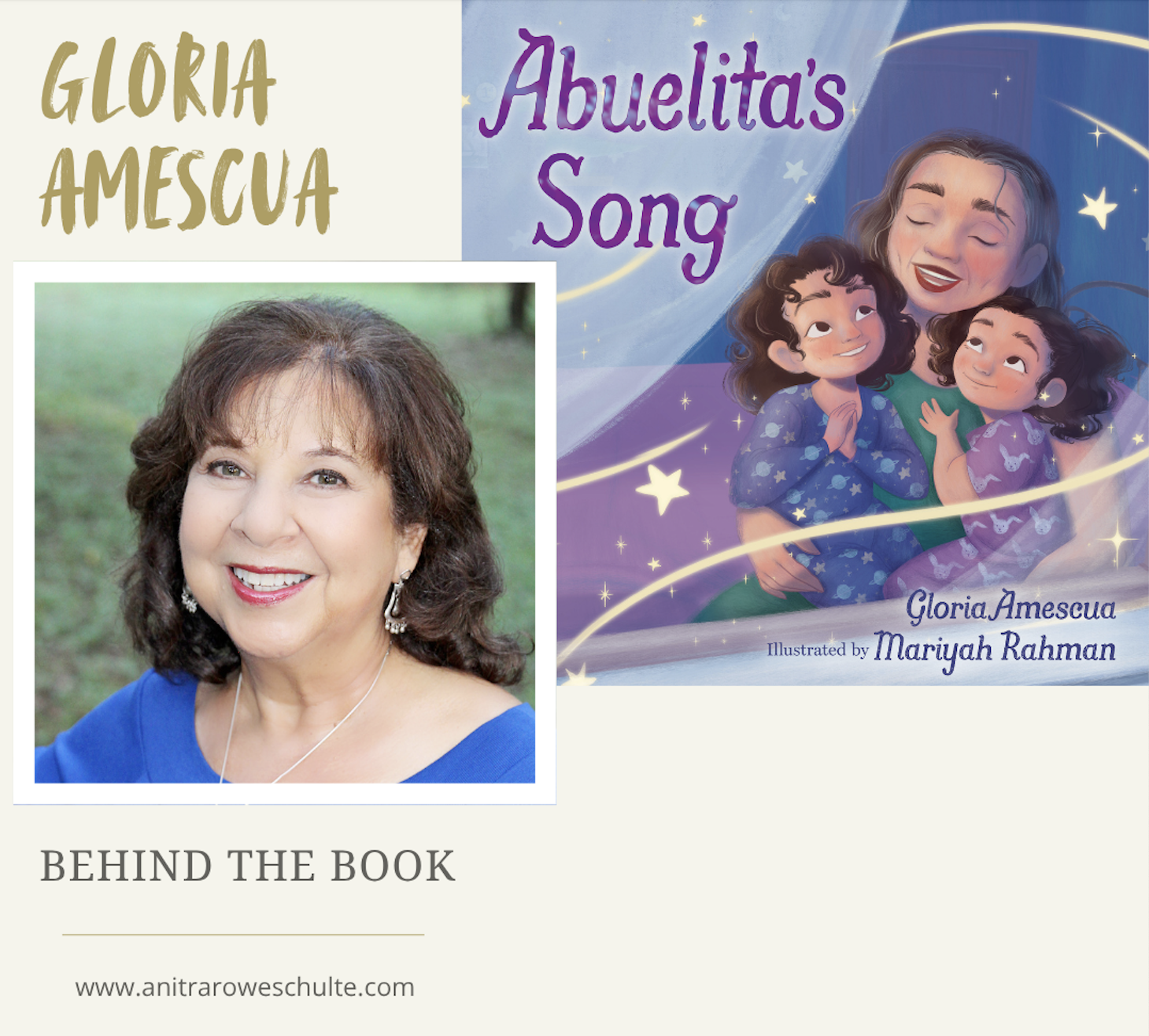
Picture books are often songs of the heart, and that’s absolutely felt when reading stories written by children’s book author Gloria Amescua. I was delighted to get to know Gloria as part of the picture book launch group PB Troupe 21, and was cheering wildly when her debut picture book, CHILD OF THE FLOWER-SONG PEOPLE (illustrated by Duncan Tonatiuh), was celebrated as a recipient of a Pura Belpré Honor.
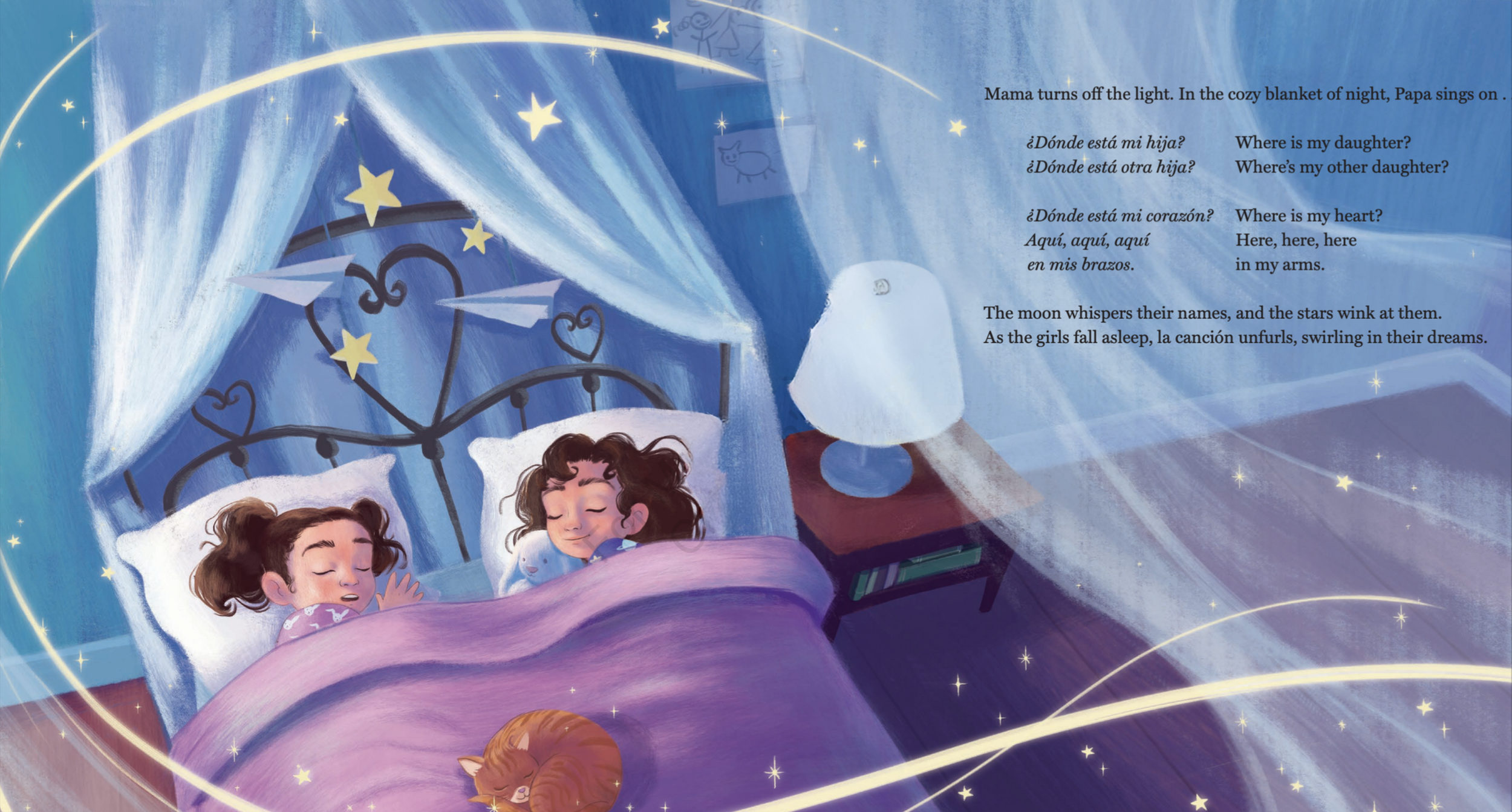
Gloria’s latest picture book, ABUELITA’S SONG (illustrated by Mariyah Rahman, Beach Lane Books), swirls and sways with music - through Gloria’s beautiful writing, Mariyah’s tender illustrations, and the lullaby that plays again-and-again in the pages of the narrative, begging to be sung by readers as they snuggle together. Here’s a summary of the story:
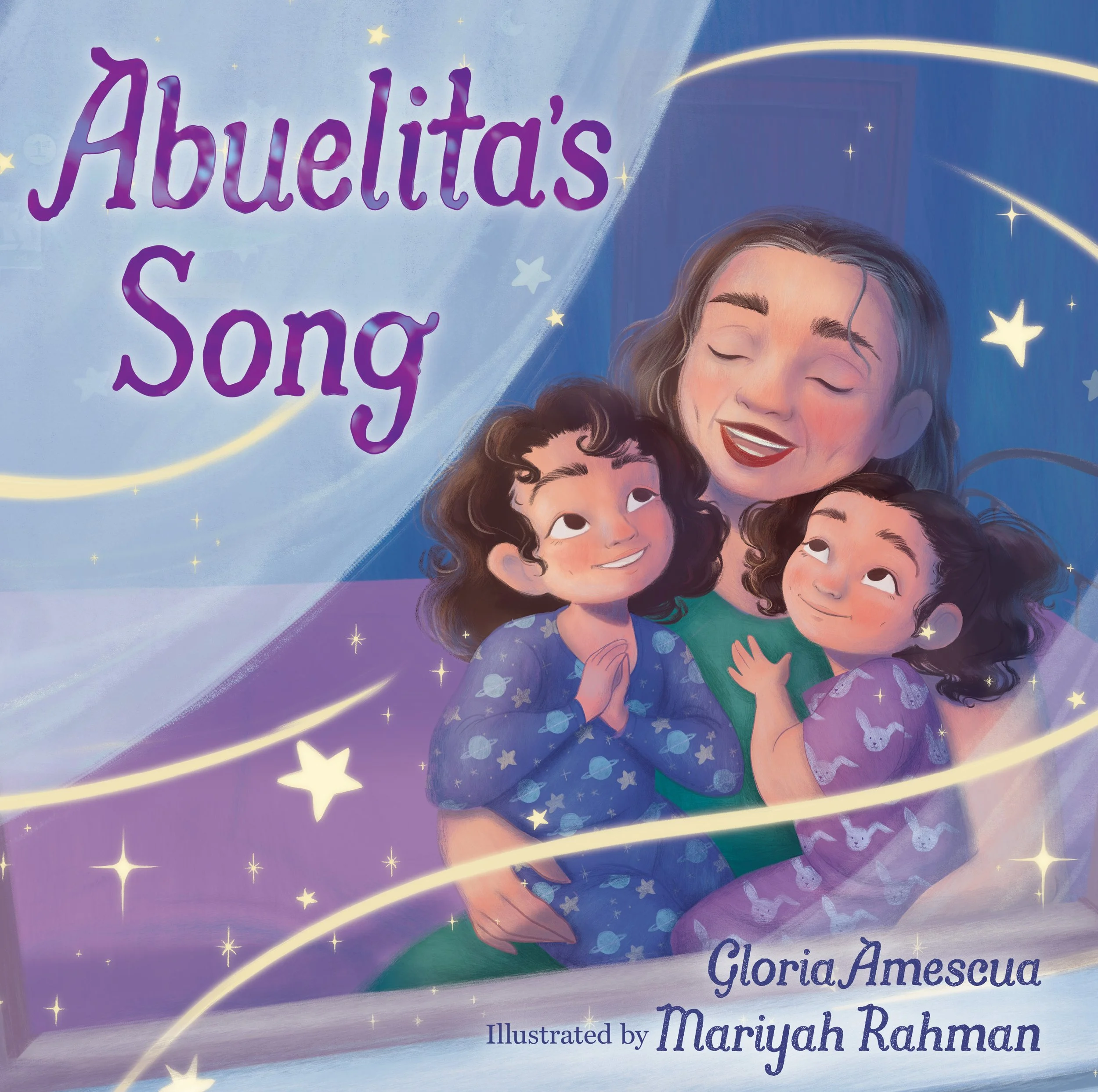
From Pura Belpré Honor author Gloria Amescua comes a sweet picture book integrating Spanish words and celebrating the family and music that connects us all.
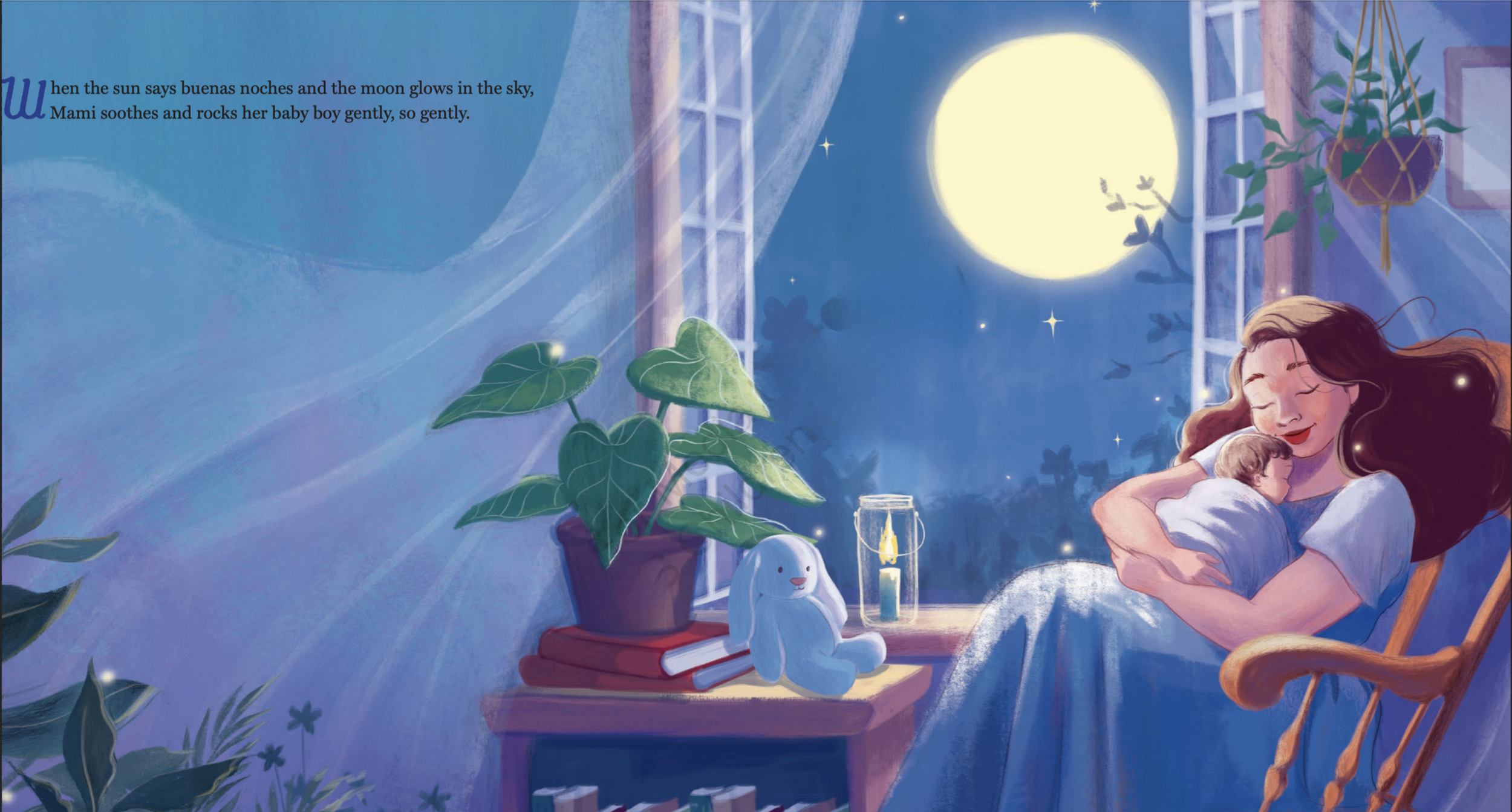
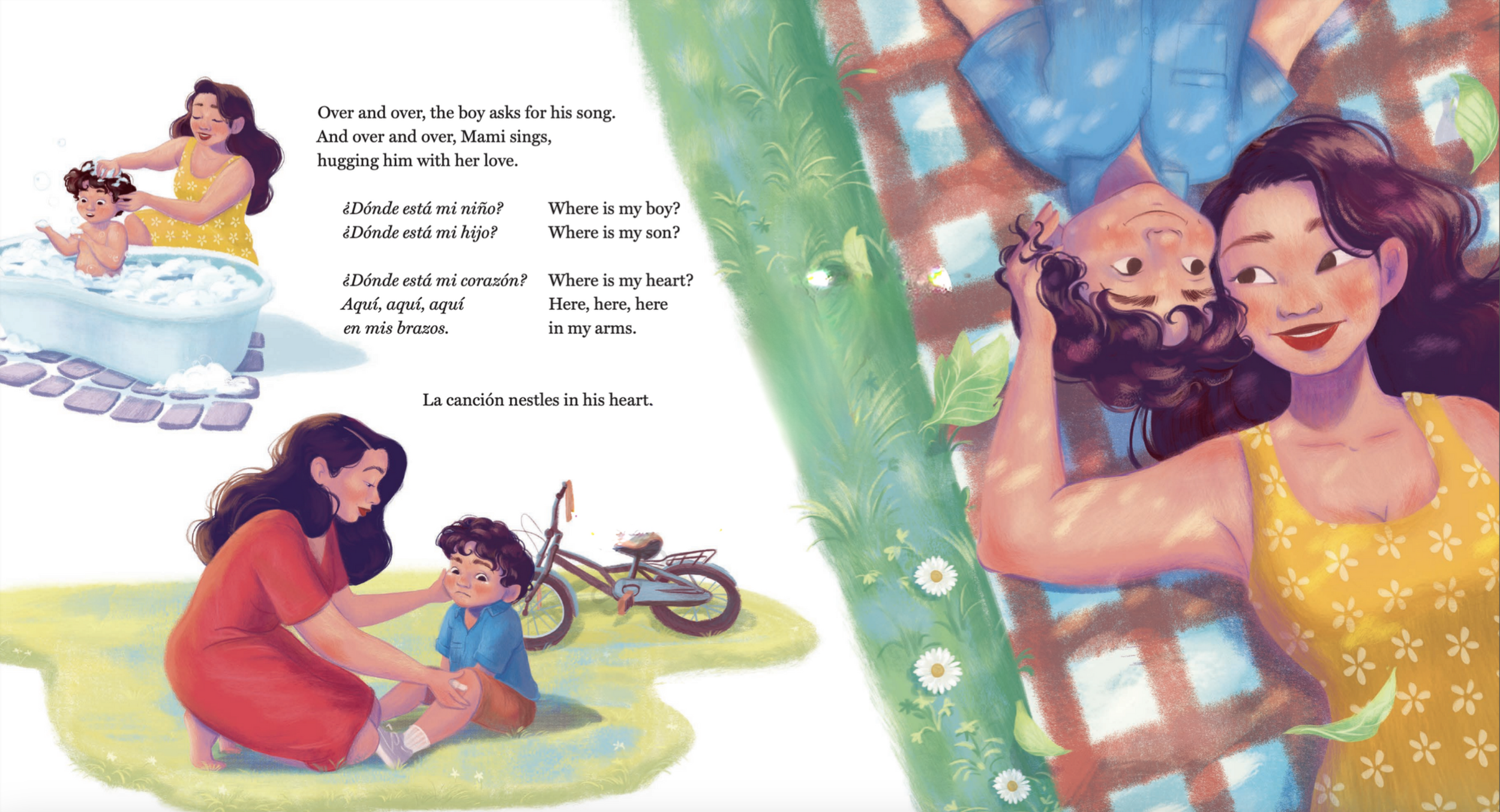
Every night, when the sun says buenas noches, a mother sings a special lullaby to her baby boy: ¿Dónde está mi corazón? Aquí, aquí, aquí en mis brazos.
As he gets older, the boy asks for his song over and over until it’s forever in his heart. When the boy grows up and moves away, he teaches the song to his daughters. And now that Abuelita is coming for a visit, the girls plan a surprise for her: they are going to sing her song, “La canción del corazón.”
ABUELITA’S SONG is a sweet, gentle story of love, family, and tradition, which delivers quiet, calm reassurance to readers as they head off to sleep. Where did this story come from? And what is Gloria’s greatest hope for it, as it meets new readers? Come along we go… Behind the Book!
How did this story evolve, as it came fully into being?

I actually didn’t remember the beginning until I looked at my folder and found my first notes from the fall and winter of 2013. I used a narrative structure of cause and effect just to get ideas down. Then I wrote down the topic and the theme and actually wrote down the song for the first time since it was all just in my memory. Then I just wrote and focused more on the grown-up girl who didn’t speak Spanish as a little girl and why she wanted to sing a lullaby in Spanish to her son and how she became the grandmother or Abuelita. The ending had her realizing her son had sung the song she made up to her granddaughters. It was very much a prose narrative without any lyricism. I worked on the lyricism before and after I sent it to my agent, Taylor Martindale Kean, whom I’d signed with in 2018. Then we put Abuelita aside as I worked on Child of the Flower-song People, my debut nonfiction picture book.
As Abuelita’s Song (with a different title) finally made its rounds to editors, I had already focused on the Abuelita coming to visit and included my real granddaughters’ antics in postponing bedtime, which I loved, but as my editor pointed out, their funny antics took away from the tender emotional aspect. Then, a pass.
My next editor suggested I start with the mother singing to the baby boy. I loved that idea and went with it. Still, it didn’t go anywhere with that editor. It took over two years before my manuscript was sent out a third time in 2019. This time three editors were interested. One wanted me to cut out the part about the mother singing to the baby boy at the beginning, but I didn’t want to do that. The other two made their best offers, and I went with my editor Catherine Laudone at Paula Wasserman, Simon & Schuster. My editor asked for a few changes, including the title, and we were on our way with a fabulous illustrator, Mariyah Rahman, summer of 2023. It just took ten years, but it’s a book now and in the world!
How might an educator bring your story into classroom activities or learning?
Educators and parents can use this story to teach kids some Spanish words for some of the words that are translated in the book with matching or other activity. Have students create their own version by filling in the blanks of Where is ___? (They can fill in the blanks with words like "my joy" or “mi alegría” ;"my love" or "mi amor". They can learn other Spanish words that are related to the night sky or to family members, etc. Kids who are Spanish speakers can also be learning the English words.
Simon and Schuster has created activities that are available here. Of course, the lyrics can be used to model writing their own songs or poems.
Teachers and students can discuss differences in bedtime routines, study the differences in other lullabies, write stories or poems about being sleepy or not being able to go to sleep, about a special relationship with a grandparent or other family member. I recommend Tonnye Fletcher’s PB Jamz blog where she has developed many teacher activities for Abuelita’s Song for our interview. Links are here as well to hear the song sung by my granddaughters, to the music and my website where you can also find these links. Here’s the web link for our April 30th PB Jamz interview which gives insight into my inspiration, music, traditions, reading and much more.
What is your biggest hope for this story?
My biggest hope is that parents, teachers and kids feel the tenderness and love expressed through song and through treasuring traditions that connect generations. I also hope it encourages parents and relatives not only to pass down traditions (whether special dishes, songs, dances, or stories) but also create their own traditions, mementos, or experiences to pass down to children in their lives. I want this story to inspire kids to write their own songs or other creative projects that they can share.
Thank you for visiting Behind the Book, Gloria, and for sharing your story of persistence, treasured traditions, and creative inspiration! Would you like to win a copy of ABUELITA’S SONG? Here’s how to enter to win:
Win a copy of ABUELITA’S SONG:
Visit @anitraroweschulte on Instagram
Like the ABUELITA’S SONG post by EOD Sunday, Sept. 28
US entries only
The winner will be announced on Monday, Sept. 29. Good luck!
